What Size Air Purifier Do You Need? A CADR Chart by Room Size
Published How we research
Pick an air purifier whose smoke CADR is at least two-thirds of your room's floor area in square feet. A 150 square foot bedroom needs a CADR of about 100, and a 300 square foot studio needs about 200. That rule comes from the Association of Home Appliance Manufacturers (AHAM), assumes a standard 8 foot ceiling and works out to roughly five air changes per hour. Below are the chart, the math behind it, and the adjustments that matter in a small apartment: tall ceilings, open studios, noise at night and the generous coverage numbers printed on many boxes.
What CADR means and why it beats the coverage claim
CADR stands for clean air delivery rate. It is the volume of filtered air a purifier delivers, in cubic feet per minute, measured at its highest fan speed. Under the AHAM AC-1 test standard it is measured separately for three particle types: smoke, dust and pollen. Smoke particles are the smallest of the three, so the smoke number is the one used for sizing, and because the test is standardized you can compare it across brands.
The "covers up to 1,000 sq ft" line on a box is not standardized in the same way. Many brands calculate it at one or two air changes per hour instead of about five, which makes the same machine look several times more capable. If a listing shows only a coverage area, look for the CADR in the specifications, or for the number of air changes per hour the claim assumes. If neither is given, treat the coverage figure with caution.
CADR chart by room size (8 foot ceilings)
Use the floor area of the room the purifier will run in, not the whole apartment. Minimum smoke CADR by room size, using the two-thirds rule: 100 sq ft (a 10 x 10 bedroom) needs 67. 120 sq ft (10 x 12) needs 80. 150 sq ft (10 x 15) needs 100. 200 sq ft needs 133. 250 sq ft needs 167. 300 sq ft needs 200. 400 sq ft needs 267. 500 sq ft needs 333.
In small-apartment terms: a bedroom of 100 to 150 sq ft is covered by a compact unit with a CADR of 70 to 100. A living room of 200 to 250 sq ft needs 135 to 170. A studio of 300 to 500 sq ft needs 200 to 330, which usually means a mid-size tower rather than a desktop model. These are minimums at top fan speed, so read the section on noise below before you buy exactly to the chart.
The math, so you can check any room
Air changes per hour equals CADR times 60, divided by the room volume in cubic feet. Room volume is floor area times ceiling height. Example: a 12 x 14 bedroom is 168 sq ft, and with an 8 foot ceiling that is 1,344 cubic feet. A purifier with a CADR of 110 delivers 110 x 60 = 6,600 cubic feet of clean air per hour, and 6,600 divided by 1,344 is 4.9 air changes per hour. The two-thirds rule is this same formula solved for about 4.8 air changes with an 8 foot ceiling.
For taller ceilings, multiply the chart value by your ceiling height divided by 8. With the 10 foot ceilings found in lofts and many older buildings the factor is 1.25, so a 300 sq ft loft needs a CADR of about 250 instead of 200.
The formula also translates box claims. A claim of 1,000 sq ft at one air change per hour equals about 200 sq ft at five air changes. As a shortcut, divide a one-air-change coverage claim by 5 and a two-air-change claim by 2.5 to get the room size the purifier really suits.
Adjustments for smoke, studios and closed doors
For wildfire smoke, AHAM's guidance is stricter: choose a smoke CADR equal to the room's square footage rather than two-thirds of it. That means 150 for a 150 sq ft bedroom and 300 for a 300 sq ft studio. The same target is reasonable if someone smokes indoors.
A purifier cleans the room it is in. Air moves slowly through doorways, so one large unit in the hallway does little for a bedroom with the door closed. In a one or two bedroom apartment, a correctly sized unit in each bedroom works better than a single oversized one in the living room. In a studio, size for the whole open area, including the kitchen zone if no door separates it.
Placement affects the result as much as size. Leave a foot or more of open space around the intake and outlet, keep the unit out from behind the sofa or curtains, and close the windows while it runs. An open window brings in new particles faster than a small purifier can remove them.
Size up so it can run quietly at night
CADR is measured at the highest fan speed, and on most purifiers that speed is too loud to sleep beside, often 50 decibels or more. On low or sleep mode the same unit delivers only a fraction of its rated CADR. The practical fix is to buy above the minimum: a purifier rated for about 1.5 times your room's requirement can hold four to five air changes per hour on a medium setting instead of full blast.
For a 150 sq ft bedroom that means looking for a CADR of about 150 rather than 100. Check the listed noise level on the lowest setting as well, since under about 30 decibels is quiet enough for most sleepers. Then check the filter cost: most HEPA filters are replaced every 6 to 12 months, and over a few years the filters can cost more than a small purifier did.
Frequently asked questions
Is a bigger air purifier always better? Up to a point. An oversized unit clears the room faster and can run on a quieter setting. The costs are floor space, purchase price and larger replacement filters. About 1.5 to 2 times the chart minimum is the useful range for a bedroom, and beyond that you are paying for capacity the room cannot use.
What size air purifier do I need for a 500 sq ft studio? A smoke CADR of about 330 with 8 foot ceilings. Two smaller units of roughly 165 each, placed at opposite ends of the room, give the same total and let you run only the one near the bed at night.
Does CADR cover odors and gases? No. CADR measures particles only. Cooking smells, smoke odor and chemical vapors are handled by activated carbon, and the amount of carbon matters: a thin carbon-coated sheet does far less than a filter that holds a thick bed of carbon pellets.
Will an air purifier fix a musty or damp apartment? No. A HEPA filter captures mold spores that are in the air, but it does not remove the moisture that lets mold grow. Bring humidity down to between 40 and 50 percent with ventilation or a dehumidifier first, then use the purifier for the particles that remain.
Products from this article
The highest-scoring picks from the buying guides mentioned above. Scores are our editorial assessment, not customer ratings.
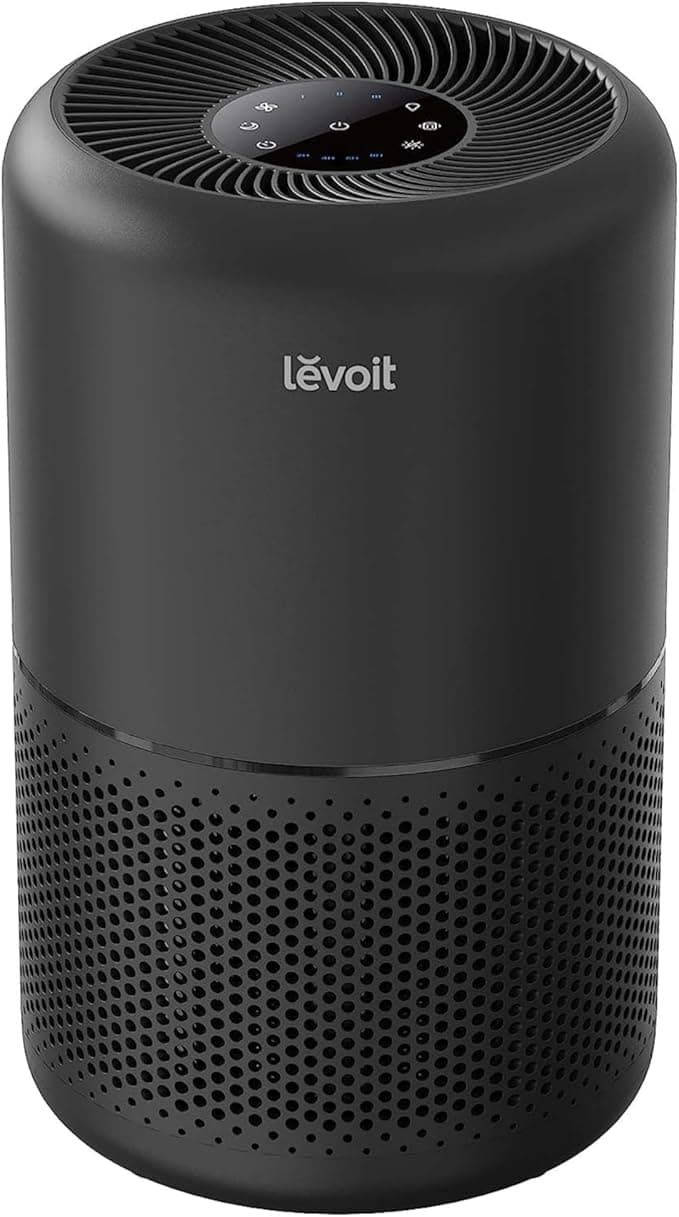
+ Built-in PM2.5 air quality sensor with auto mode adjusts the fan automatically
From our guide: Best Air Purifiers for Small Apartments
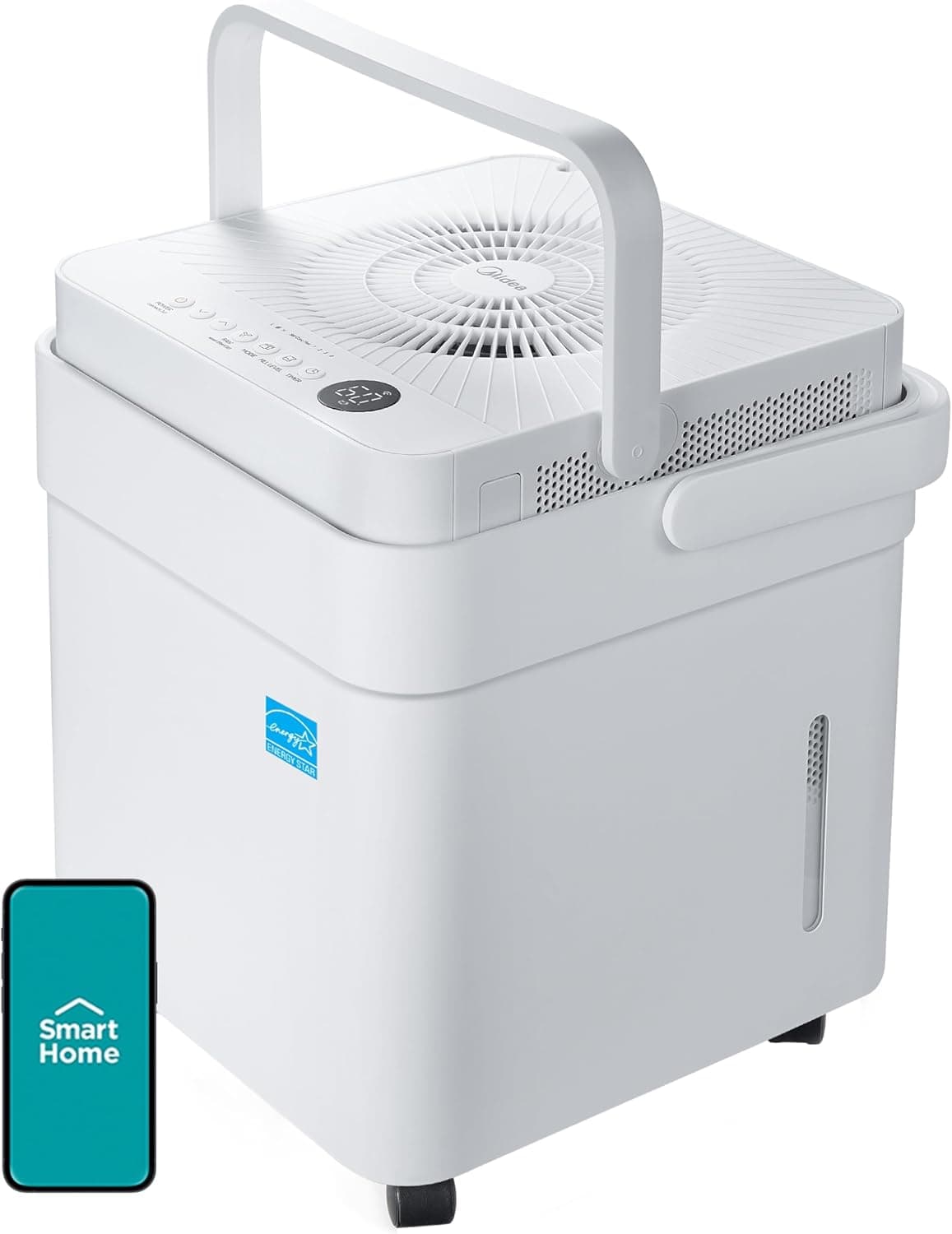
+ Compressor power removes far more moisture than peltier units, good for damp studios up to 1,500 sq ft
From our guide: Best Small Dehumidifiers for Apartments
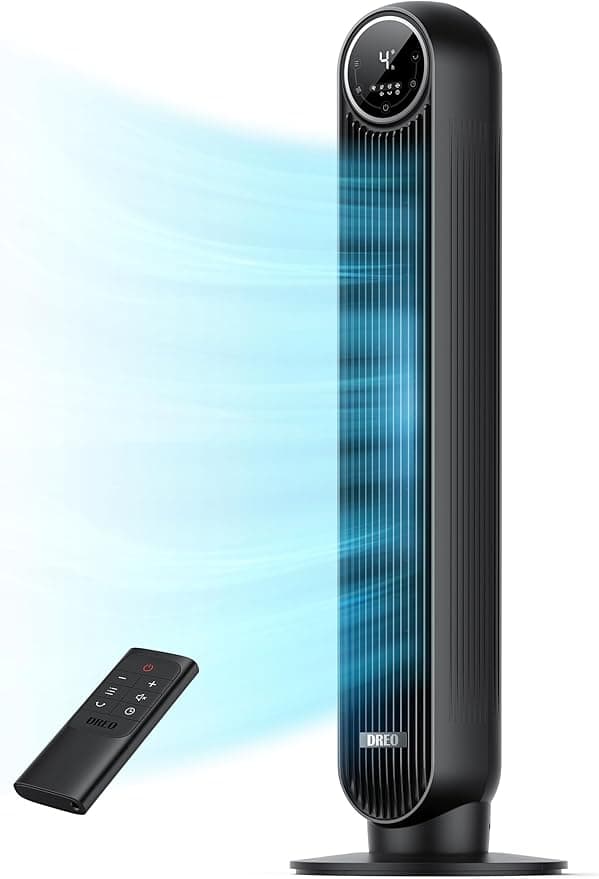
+ Quiet DC motor rated near 20 dB on low, genuinely unobtrusive for sleeping
From our guide: Best Quiet Fans for Small Bedrooms
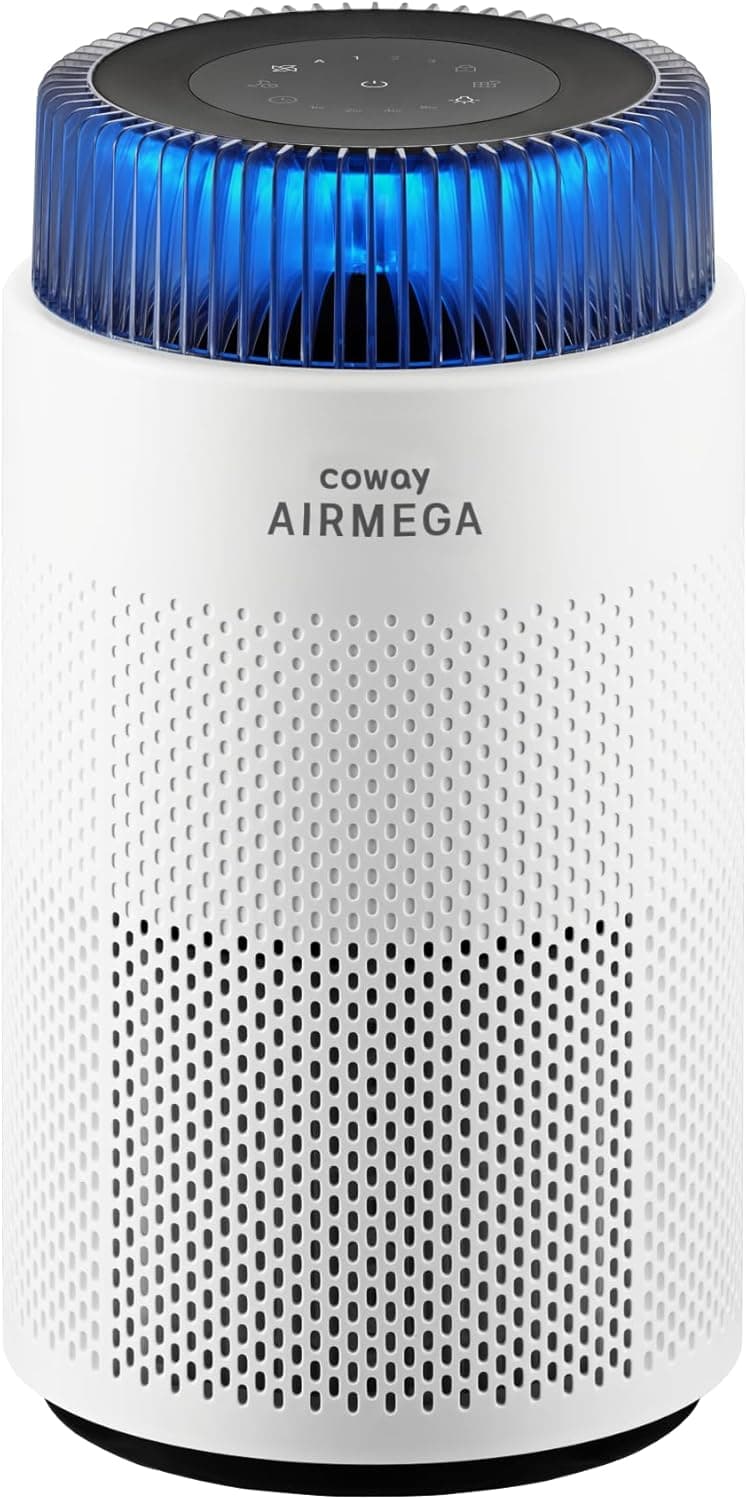
+ Excellent price-to-performance with one of the best value ratings among small purifiers
From our guide: Best Air Purifiers for Small Apartments
Popular right now
- Best Air Purifiers for Small ApartmentsBuying guide
- Best Quiet Fans for Small BedroomsBuying guide
- Best Stackable Storage Bins for ClosetsBuying guide
- Best Compact Ironing Boards for Small ApartmentsBuying guide
- Best Peel-and-Stick Backsplash for RentersBuying guide
- Best Slim Rolling Storage Carts for Narrow SpacesBuying guide
Based on the last 28 days of search and visitor data.