How to Store Clothes Without a Closet or Dresser: Renter Setups
Published How we research
To store clothes without a closet or dresser, combine three things: a freestanding garment rack for hanging pieces, under-bed bins or stacked fabric cubes for folded clothes, and vacuum bags or lidded boxes for off-season items. Together they replace the roughly 30 inches of rod and 3 to 4 drawers most small closets and dressers provide, and all of it stands on the floor, so nothing is drilled and everything leaves with you on move-out day. The steps below size each piece to what you actually own.
Products from this article
The highest-scoring picks from the buying guides this article links to. Scores are our editorial assessment, not customer ratings.
As an Amazon Associate we earn from qualifying purchases. This does not change our picks. Affiliate disclosure
New to Prime? Try Prime free for fast, free shipping on eligible items.
+ Four 360-degree wheels, two with locks, make sliding it out from under a low bed effortless
From our guide: Best Under-Bed Storage Containers for Small Apartments
+ Heavy-duty boards in sides and base for shape
From our guide: Best Collapsible Storage Cubes for Small Spaces
+ Double-zip seal plus screw-cap valve holds compression for months
From our guide: Best Vacuum Storage Bags for Seasonal Clothes
+ Wheels roll fully loaded bins out without lifting
From our guide: Best Under-Bed Storage Containers for Small Apartments
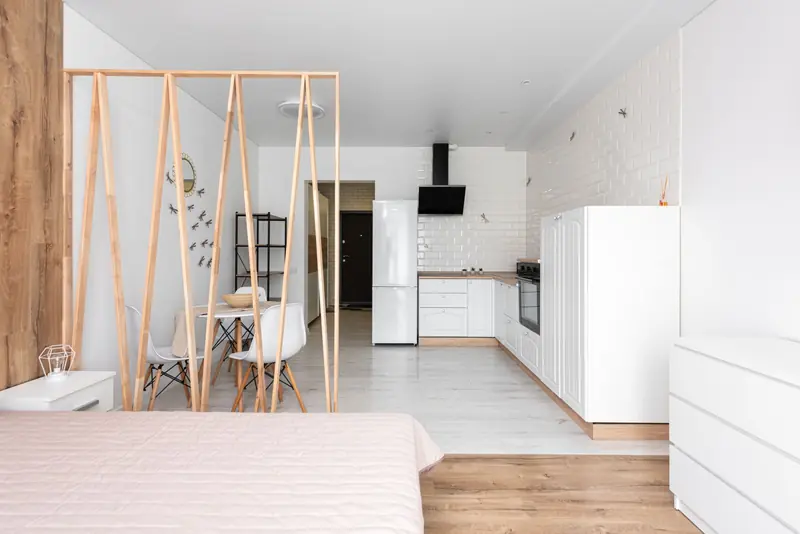
Step 1: Count what you own before you buy storage
Sort clothes into hanging items (shirts, dresses, coats, trousers you do not fold) and folded items (tees, knits, jeans, underwear, workout wear, pajamas). Then measure the hanging group by pushing the hangers together on any rod or door handle and measuring their width. A typical wardrobe of 40 to 60 hanging pieces on slim hangers needs about 30 to 36 inches of rod length, and longer if you use thick wooden hangers.
For folded clothes, count in stacks rather than items. One drawer in a standard dresser holds about 8 to 12 folded tees or 4 to 6 pairs of jeans, so a folded wardrobe of 30 tees, 8 pairs of jeans and a few sweaters needs the volume of about three drawers. That number is what you are replacing with bins and cubes.
Step 2: Use a freestanding garment rack for hanging clothes
A freestanding garment rack is the closest thing to a closet. Look at three specs before ordering: the rod length (about 36 to 48 inches is enough for most single people), the rod height (a rack that reaches 65 to 70 inches clears a long dress or coat, while shorter racks suit shirts and trousers), and the stated weight limit. Check the manufacturer's weight figure against your heaviest load, because a winter coat collection weighs more than it looks.
Racks with a bottom shelf give you a place for shoes or a bin, and a top shelf can hold folded sweaters. Wheels help in a studio, but pick locking ones so the rack does not drift when you pull out a hanger. Keep the rack against a wall rather than in the middle of the room, and hang long items at the ends so they do not drag on the floor.
If the rack stands in the open, dust and sunlight reach the clothes. A zip-up garment cover or a simple fitted rack cover solves that, and it hides the visual clutter that makes a studio feel smaller.
Step 3: Replace the dresser with under-bed bins and stacked cubes
The space under a bed is the biggest free storage area in a small bedroom. Measure the clearance from the floor to the bed frame; many frames leave 6 to 8 inches and bed risers can add 4 to 6 inches more. Low rolling bins that fit the clearance hold folded tees, pajamas and workout clothes, and the wheels let you pull a bin out like a drawer. Label the front or use clear lids so you can find a shirt without opening three bins.
For the rest, stack fabric storage cubes in a 2 by 2 or 2 by 3 arrangement against a wall. Collapsible cubes in the 11 to 13 inch range fit folded jeans and sweaters standing on edge, and a cube with a handle works as a drawer substitute. If the stack is taller than about 3 cubes, put it against a wall and place heavier items at the bottom so it does not tip. Fold clothes into small rectangles and stand them on edge so each item is visible from above, which is the same file-style fold used for drawers.
A closet-style shelving tower with fabric drawers is a third option when you want a real dresser footprint without a real dresser. Pick one with a stated weight limit per shelf and a stable base.
Step 4: Put off-season clothes in vacuum bags or lidded boxes
Winter coats, bulky sweaters and spare bedding take up the most room and are used the least. Vacuum storage bags can shrink synthetics and down to a fraction of their volume, while wool and delicate knits are better kept in lidded boxes, because long compression can flatten fibers. Wash everything before storing it, since stains and body oils set over months.
Store the bags flat under the bed or on top of a wardrobe-style rack. Swap them twice a year, and use that moment to edit what you no longer wear. A small wardrobe of in-season clothes is far easier to keep tidy with rack and cubes than a full year of clothing.
Step 5: Add hooks, doors and small extras
Damage-free adhesive hooks on a wall or the back of a door hold daily wear, such as tomorrow's jacket or a bag. Always follow the weight rating on the package and clean the surface first, because hooks fail most often on dusty or textured paint. A door is also an easy place for an over-the-door organizer that holds socks, scarves, belts and underwear in small pockets.
A tension rod between two walls, a gap or an alcove can create a hanging rail without a single screw. Check that the rod's stated weight limit covers the clothes you plan to hang, and keep to light items such as shirts and blouses.
A sample layout for a studio with no closet
A workable setup for one person looks like this: one 40 to 48 inch garment rack along the wall for 40 to 50 hanging pieces, two or three rolling bins under the bed for folded casual clothes, a stack of four collapsible cubes for jeans and sweaters, and two vacuum bags for out-of-season coats stored under the bed. The total footprint is a rack about 18 inches deep plus a 2 by 2 cube stack, and everything folds or rolls away when you move.
Leave a walking path of at least 30 inches in front of the rack so you can reach the clothes without moving anything, and keep the rack away from radiators and windows with direct sunlight.
Frequently asked questions
How many clothes can a garment rack hold? That depends on the stated weight limit and the rod length. A 36 to 48 inch rod fits about 40 to 60 slim-hung items, but the limit that matters first is usually weight, so keep heavy coats near the vertical posts and check the manufacturer's figure.
Should I fold or hang clothes when I have no closet? Hang shirts, dresses and anything that wrinkles on the rack, and fold knits, tees, jeans and workout clothes into bins or cubes. Hanging knits stretches the shoulders and uses rack space that is better kept for items that need it.
How do I keep clothes dust-free without a closet? Use a zip-up garment cover on the rack, keep folded clothes in lidded or zippered bins, and store off-season pieces in sealed bags. Washing items before storage also helps stop odors and stains from setting.
What is the cheapest way to start? A single garment rack and two under-bed bins cover most of a basic wardrobe. Add cubes or a shelving tower only after you see how many folded items are left over.
Popular right now
- Best Air Purifiers for Small ApartmentsBuying guide
- Best Stackable Storage Bins for ClosetsBuying guide
- Best Quiet Fans for Small BedroomsBuying guide
- Best Compact Ironing Boards for Small ApartmentsBuying guide
- Best Peel-and-Stick Wallpaper for RentersBuying guide
- Best Peel-and-Stick Backsplash for RentersBuying guide
Based on the last 28 days of search and visitor data.