Autonomier 4-Tier Extra-Small Shoe Rack (16.3 in) Review (2026)
Updated September 20, 2026 · Research-based review
Our verdict
Anyone squeezing shoe storage into a truly narrow entryway corner or closet gap should look at this rack. Its 16.3 inch width and stackable design fit spots a standard rack cannot, but each tier only holds about two pairs, so it suits light shoe collections or kids' shoes more than a full household's footwear.
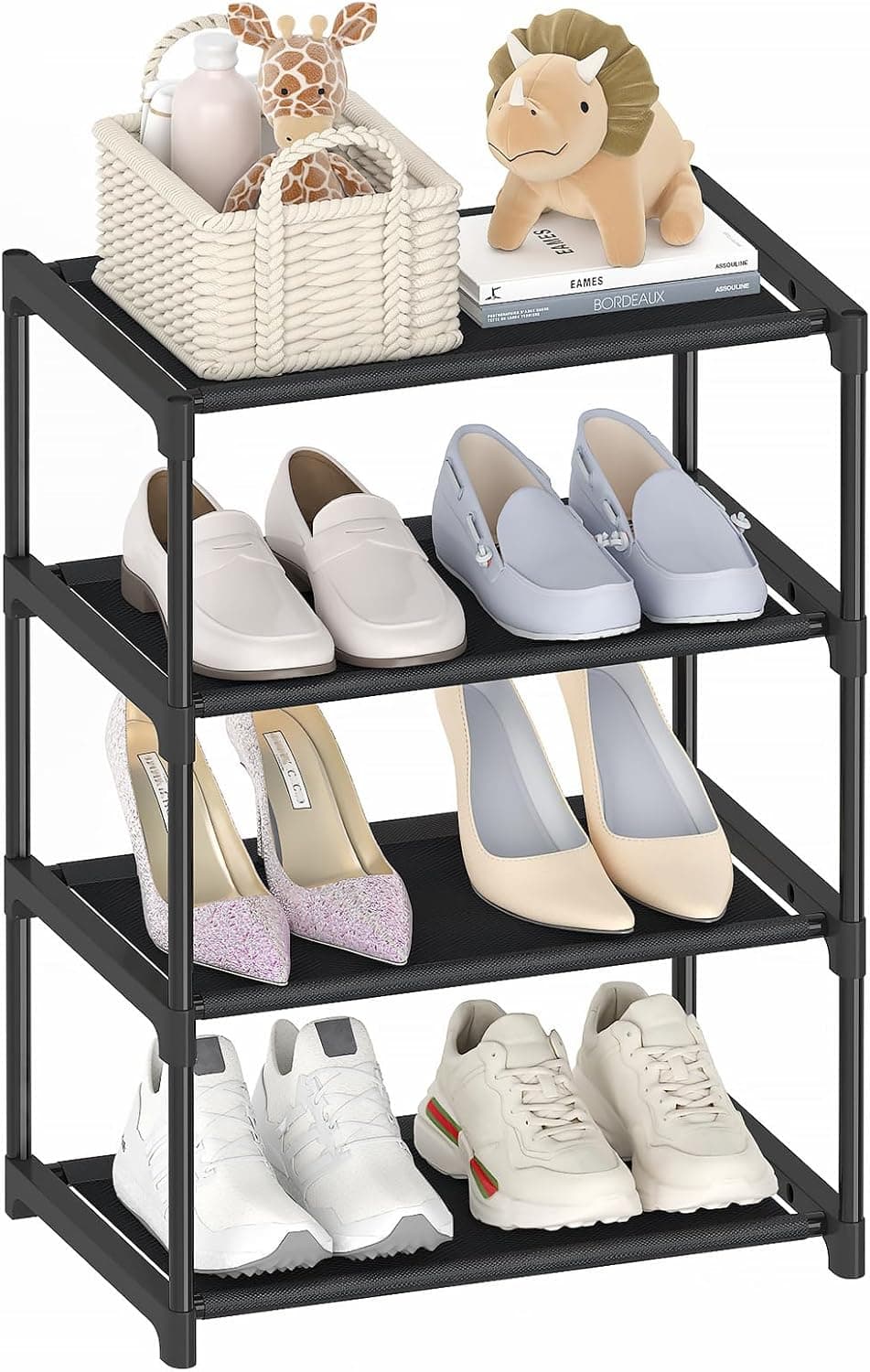
Extra-small narrow stackable rack ideal for the tightest entryway spots.
Price range: $ (Budget)
What we liked
- + Extra-small 16.3 inch width fits tiny spaces
- + Tool-free assembly under 10 minutes
- + Stack multiple units to expand vertically
Trade-offs
- - Only about two pairs per tier
- - Best for small or kids shoes
Built for tight spaces
At 16.3 inches wide by roughly 10.2 inches deep and 21.5 inches tall for the four-tier version, this rack is sized for the kind of narrow gap that a standard 30-plus inch shoe rack cannot fit into, such as a slim entryway corner, the side of a closet, or a dorm room wall. The frame uses black metal tubes joined with reinforced plastic connectors, and the shelves themselves are a waterproof non-woven fabric rather than solid wood or wire mesh. Because the unit is designed to stack, buyers who need more capacity can add a second or third rack directly on top rather than buying a wider single unit, which keeps the footprint narrow while still growing storage vertically. This makes it a fit for apartments, dorms, and small closets where floor space is at a premium and a bulky rack simply will not clear the doorway or corner.
Assembly and everyday use
The rack goes together without tools, with the metal tubes and plastic connectors snapping into a compact, tight fit that the manufacturer says keeps the shelves from working loose over time. Because it is lightweight, it can be picked up and moved to vacuum underneath or relocated to another room without much effort, which is convenient for renters who rearrange furniture often or need to clean an entryway regularly. Each of the four tiers is sized for about two pairs of shoes, based on the product listing, so this is not a rack meant to organize a large family's full shoe collection on its own; it is better suited to a single person's rotation of daily shoes, a kid's shoe collection, or as a secondary rack next to a larger one. The narrow width also means larger shoes like men's boots may not sit as neatly as smaller sneakers or flats.
Stacking for more capacity
The stackable design is the rack's main selling point beyond its narrow footprint: rather than replacing a small rack with a bigger one as shoe collections grow, buyers can add another 4-tier unit directly on top to double capacity while keeping the same 16.3 inch width. This vertical growth path suits closets with tall, narrow gaps better than horizontal ones, and it lets a household start with one rack and expand later instead of committing to a large piece of furniture up front. Because the connectors are described as tool-free and compact, stacking additional units should not require extra hardware, though buyers should confirm the connectors are rated to bear the added weight of a second or third rack loaded with shoes before stacking heavily. For entryways where floor space is the binding constraint, stacking is the practical way to add slots without widening the unit.
Materials and durability trade-offs
The combination of thin metal tubing, plastic connectors, and fabric shelves keeps the rack light and inexpensive, but it also means it is built to a budget standard rather than a heavy-duty one. The non-woven fabric shelves are described as waterproof, which helps with damp or muddy shoes, but fabric shelving generally sags more under weight than wire or wood over repeated use, and heavier boots or work shoes are more likely to test that limit than lightweight sneakers or sandals. The plastic connectors are the weak point to watch on any rack in this style, since repeated assembly and disassembly, or overloading a tier, can loosen the tight fit the manufacturer describes. Buyers who need a rack to survive years of heavy daily use with work boots may find a metal wire or solid wood rack holds up better than this fabric-and-tube design, even though it will cost more and take up a wider footprint.
Bottom line for narrow entryways
This rack solves a specific problem well: fitting real shoe storage into a gap too narrow for most standard racks, whether that is a slim entryway corner, a closet sliver, or a dorm room wall. It assembles without tools, stays light enough to move for cleaning, and can stack to add capacity without growing wider. The trade-off is capacity per tier, since roughly two pairs per shelf means a household with many shoes will need to stack several units or supplement with another rack elsewhere. Anyone storing mostly lightweight or kids' shoes in a tight space will likely be satisfied, while anyone hoping to store a large family's boots and sneakers on one compact rack should plan to stack multiple units from the start.
Frequently asked questions
How many pairs of shoes fit on this rack?
Each of the four tiers holds about two pairs, so the full rack is sized for roughly eight pairs depending on shoe size.
Do I need tools to assemble it?
No, the metal tubes and plastic connectors snap together without tools, and the manufacturer says assembly takes under 10 minutes.
Can I stack multiple racks on top of each other?
Yes, the design is meant to stack, so a second or third 4-tier unit can be added on top to increase capacity without widening the footprint.
Will this fit adult men's shoes or work boots?
It is sized as an extra-small, narrow rack best suited to smaller shoes, kids' shoes, or slim sneakers rather than bulky boots.
Prices change often, so check the current price and availability on Amazon.
Check price on AmazonSmall Space Picks may earn a commission from the link above.