STICKGOO 10-Sheet Subway Tile Backsplash Review (2026)
Updated September 14, 2026 · Research-based review
Our verdict
STICKGOO's white subway sheets cover a kitchen backsplash in an afternoon without grout or tools, using ten peel-and-stick panels instead of individual tiles. The trade for that speed is careful seam alignment, since pattern matching there, not the tile surface, decides whether the wall looks continuous.
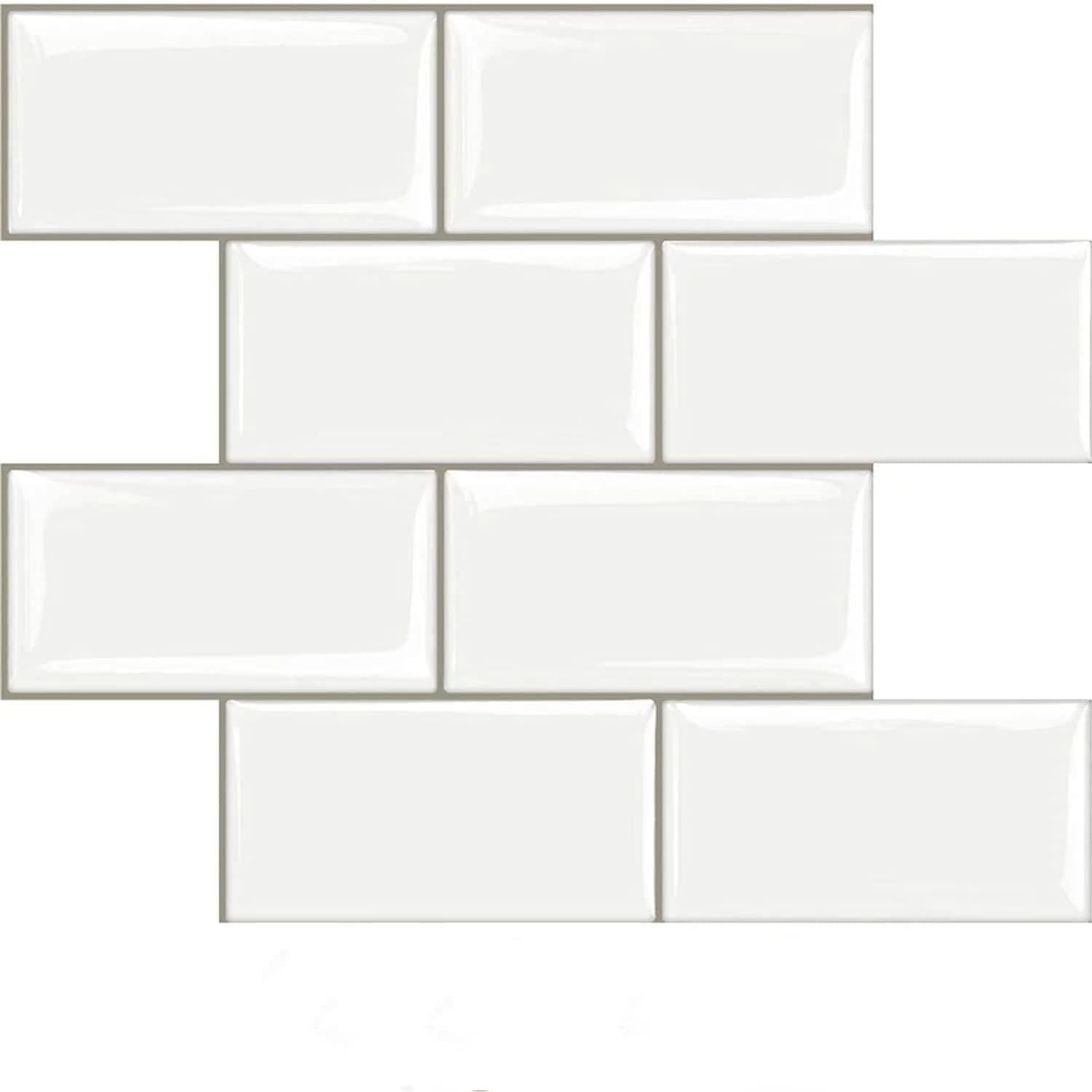
The fast-cover subway sheets for a whole backsplash in one afternoon.
Price range: $$ (Mid-range)
What we liked
- + Sheet format covers a kitchen backsplash in an hour
- + Classic white subway pattern matches any rental kitchen
- + Overlap seams hide cut lines well
Trade-offs
- - Sheets need careful pattern matching at joints
- - Gloss level differs slightly from ceramic under raking light
What this kit is built to cover
This is a 10-sheet kit of peel-and-stick subway tile in white, sold in a thicker design with each sheet measuring roughly 12.6 by 10.6 inches plus a smaller filler piece around 2.6 by 4.9 inches to help finish edges and corners. Rather than applying dozens of individual small tiles, each sheet already has the subway brick pattern printed and embossed across its full surface, so one sheet covers a section of wall in a single placement. Ten sheets sized this way cover roughly 8 to 9 square feet, enough for a standard stove backsplash or a run behind a countertop, though a full wall-to-wall kitchen backsplash may need a second kit. This format suits anyone who wants the classic white subway look without cutting, grouting, or a weekend-long tiling project.
Material and finish details
Each sheet is roughly 2mm to 2.5mm thick, built on an EVA foam-backed substrate that STICKGOO describes as waterproof and heat resistant, which is why it is marketed for kitchen and bathroom walls near stoves and sinks. The backing adhesive is described as a stronger, thicker glue than earlier peel-and-stick tile generations, intended to grip painted drywall or existing tile without slipping over time. The printed grout lines are part of the sheet rather than a separate grouting step, which is what makes installation fast but also means the grout line color and spacing are fixed rather than customizable. Under close inspection or raking light, the surface gloss reads slightly differently than fired ceramic tile, a cosmetic difference rather than a functional one, since the underlying material is a printed vinyl composite rather than clay.
Installing it well
Installation follows a standard peel-and-stick process: clean the wall surface thoroughly, remove existing grease or residue since the adhesive needs full contact, then peel the backing and press each sheet into place, smoothing from the center outward to avoid trapped air. The seam between adjoining sheets is where most of the finished quality comes from, since the brick pattern has to line up from one panel to the next for the eye to read it as one continuous backsplash rather than a grid of separate rectangles. Overlapping the sheets slightly at the joints, as STICKGOO's own installation guidance suggests, helps hide the cut lines between panels. Because there is no wet grout or adhesive to cure, a finished backsplash section is usable almost immediately, which is a genuine advantage over traditional tile for a rental kitchen refresh.
How it stacks up against other peel-and-stick backsplash options
On the site's peel-and-stick backsplash for renters guide, this STICKGOO sheet kit ranks fourth of eight with our score of 6.9 out of 10, behind the Smart Tiles 3D backsplash and STICKGOO's own thicker Wall Tile variants, which score slightly higher on features and specs. Compared with piece-by-piece kits like the Vamos Tile and Art3d individual subway tiles, the sheet format here trades a small amount of pattern flexibility for a much faster install, since laying a hundred individual pieces by hand takes considerably longer than pressing ten pre-patterned sheets. Fit for the job is where this kit scores strongest among the group, reflecting how directly it matches a straightforward backsplash refresh, while features and specs lag slightly behind pricier 3D-textured alternatives.
Bottom line
This is a strong pick for anyone who wants a classic white subway backsplash finished in an afternoon without committing to real tile or losing a security deposit over drilling and grout. The sheet format keeps installation fast and the waterproof, heat-resistant backing holds up near a stove or sink. Take the time to dry-fit sheets and plan overlaps before committing to adhesive, since seam alignment, not the tile itself, determines whether the finished wall reads as one continuous pattern. Buyers who want individually placed tiles for more customization around outlets and corners should look at a piece-by-piece kit like the Art3d option instead.
Frequently asked questions
How much wall does one 10-sheet kit cover?
Each sheet measures about 12.6 by 10.6 inches, so ten sheets cover roughly 8 to 9 square feet, enough for a standard stove backsplash section.
Is grout needed with these sheets?
No, the subway pattern and grout lines are printed into each sheet, so there is no separate grouting step required during installation.
Is it safe to install behind a stove?
STICKGOO markets the thicker sheets as waterproof and heat resistant for kitchen use, but always follow the manufacturer's clearance guidance near open flames or heating elements.
Can the sheets be removed without damaging the wall?
Peel-and-stick tile sheets like this one are designed to be more removable than adhesive-set ceramic tile, though results depend on the wall surface and how long the sheets have been in place.
Prices change often, so check the current price and availability on Amazon.
Check price on AmazonSmall Space Picks may earn a commission from the link above.