Why Adhesive Hooks Keep Falling Off the Wall
Published How we research
Removable adhesive hooks are a renter's best friend until one drops a framed print at three in the morning. When they fail, it is rarely a bad product. It is usually the wall surface, the prep, the temperature or the weight, and each of those is easy to correct.
The wall surface is wrong for adhesive
Adhesive strips need a smooth, clean, sound surface to grip. Textured walls, flaky or chalky paint, wallpaper, brick and freshly painted walls all give the adhesive far less contact area. On textured paint the strip only touches the peaks, so the real bonded area can be a fraction of what the package assumes.
Fresh paint is a hidden trap. Many manufacturers advise waiting about a week after painting before applying strips, because paint that has not fully cured stays soft and releases along with the hook. If your landlord repainted just before you moved in, give the walls time.
Prep and pressure make the bond
Oils, dust and cleaning residue stop adhesive from sticking. Wipe the spot with rubbing alcohol on a cloth, not a household spray cleaner that leaves a film, and let it dry. Then press the strip firmly for about 30 seconds, since the adhesive bonds under pressure rather than on contact.
Wait before loading. Most strips reach a much stronger hold after about an hour, so hang the hook, walk away and come back later to add the coat, towel or frame. Loading immediately is one of the most common reasons hooks slide or drop in the first day.
Weight, heat and humidity
The weight rating assumes a still load pulling straight down. A towel hook that gets yanked daily, a bag that swings, or a frame hung from a single strip at an angle puts far more force on the adhesive than the number suggests. Stay well under the rating and use two strips for anything heavy or frequently handled.
Bathrooms and sunny walls are tough environments. Steam softens many adhesives and heat can make them creep, so look for strips specifically rated for bathrooms and avoid mounting hooks near radiators, heaters or in direct afternoon sun.
Removing hooks without damage
When it is time to take a hook down, pull the stretch tab slowly straight down along the wall, keeping it parallel to the surface, and never pull it outward. Stretching releases the adhesive; pulling away rips paint.
If a tab snaps, warm the strip gently with a hair dryer for 20-30 seconds and work dental floss behind it with a sawing motion. For items that need real holding power, consider tension rods, freestanding shelves or over-the-door racks instead of pushing adhesive beyond what it can do.
Better options for heavy or awkward items
Mirrors, large art, shelves loaded with books and anything that gets pulled every day are poor jobs for adhesive. Leaning a large mirror against the wall, using a freestanding coat rack or an over-the-door hook rack spreads weight without relying on a small bonded area.
If your lease allows small holes, a single picture hook nail leaves a hole the size of a pin that is easy to fill with spackle at move-out, and often causes less damage than a failed adhesive strip that tears paint.
Products from this article
The highest-scoring picks from the buying guides mentioned above. Scores are our editorial assessment, not customer ratings.
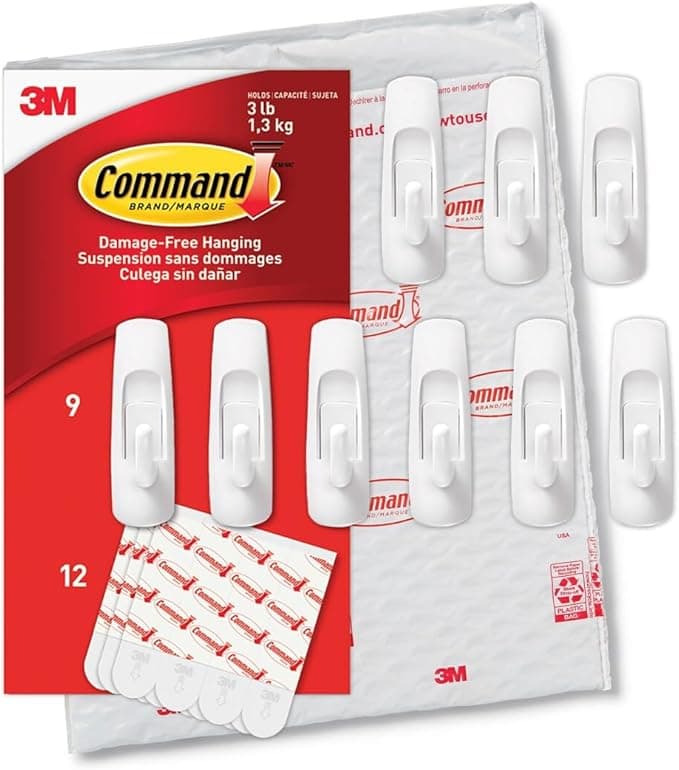
+ Stretch-release strips remove cleanly from painted walls with no holes or sticky residue, the key feature renters need
From our guide: Best Damage-Free Wall Hooks for Renters
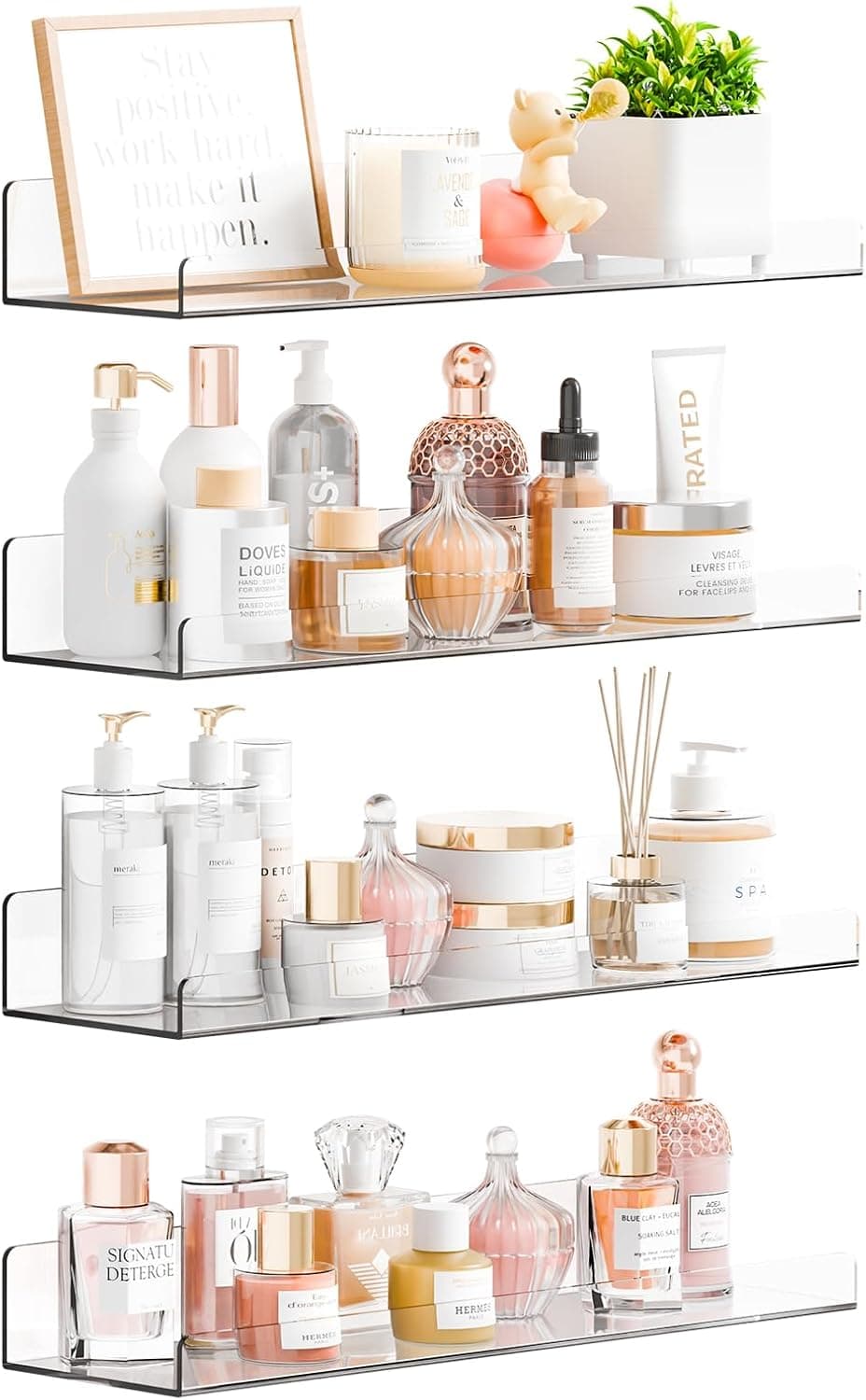
+ Four 15-inch clear shelves outfit a bathroom or desk wall at once
From our guide: Best No-Drill Floating Wall Shelves for Renters
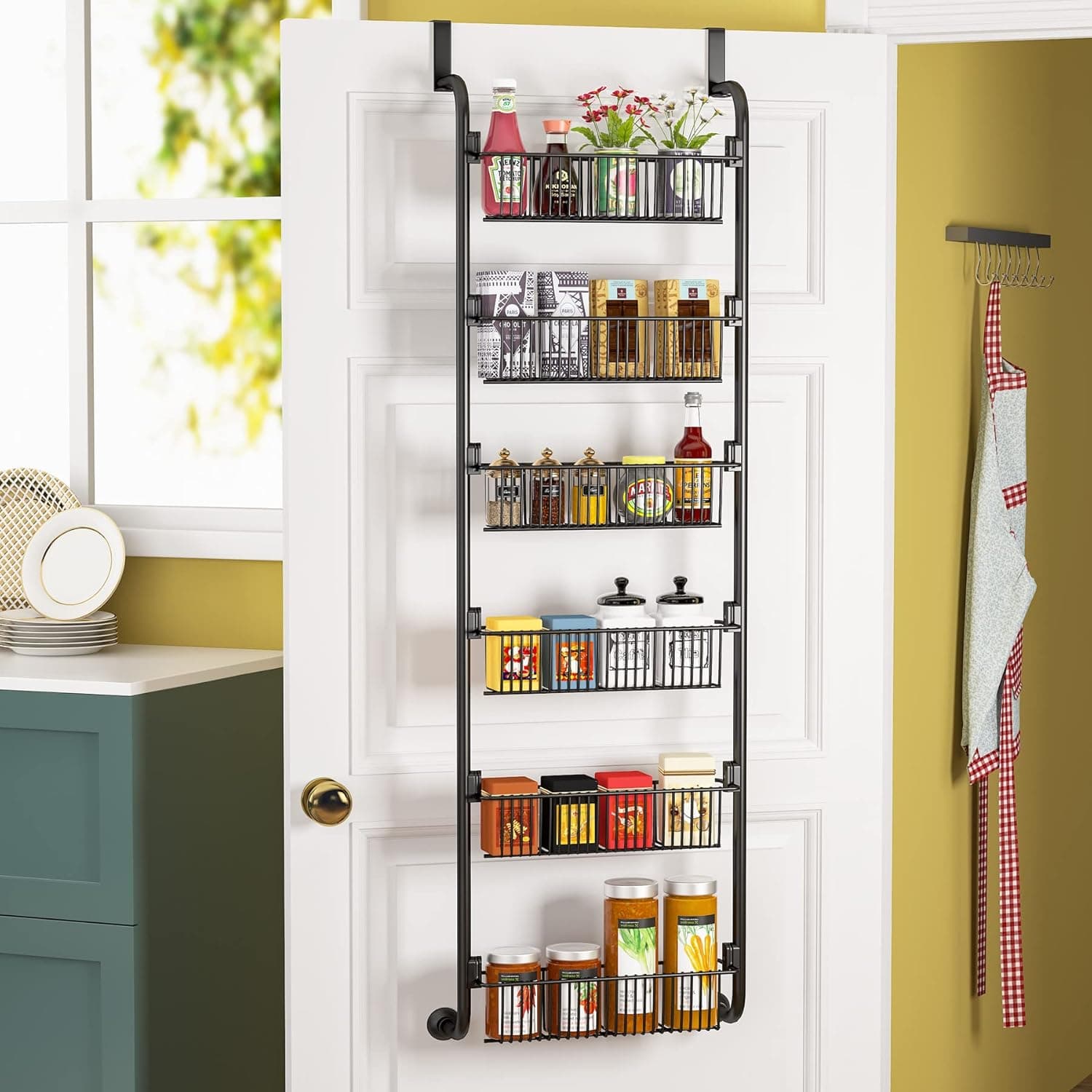
+ Solid steel construction holds heavy cans, jars, and spice bottles without bending or sagging
From our guide: Best Over-the-Door Organizers for Small Apartments
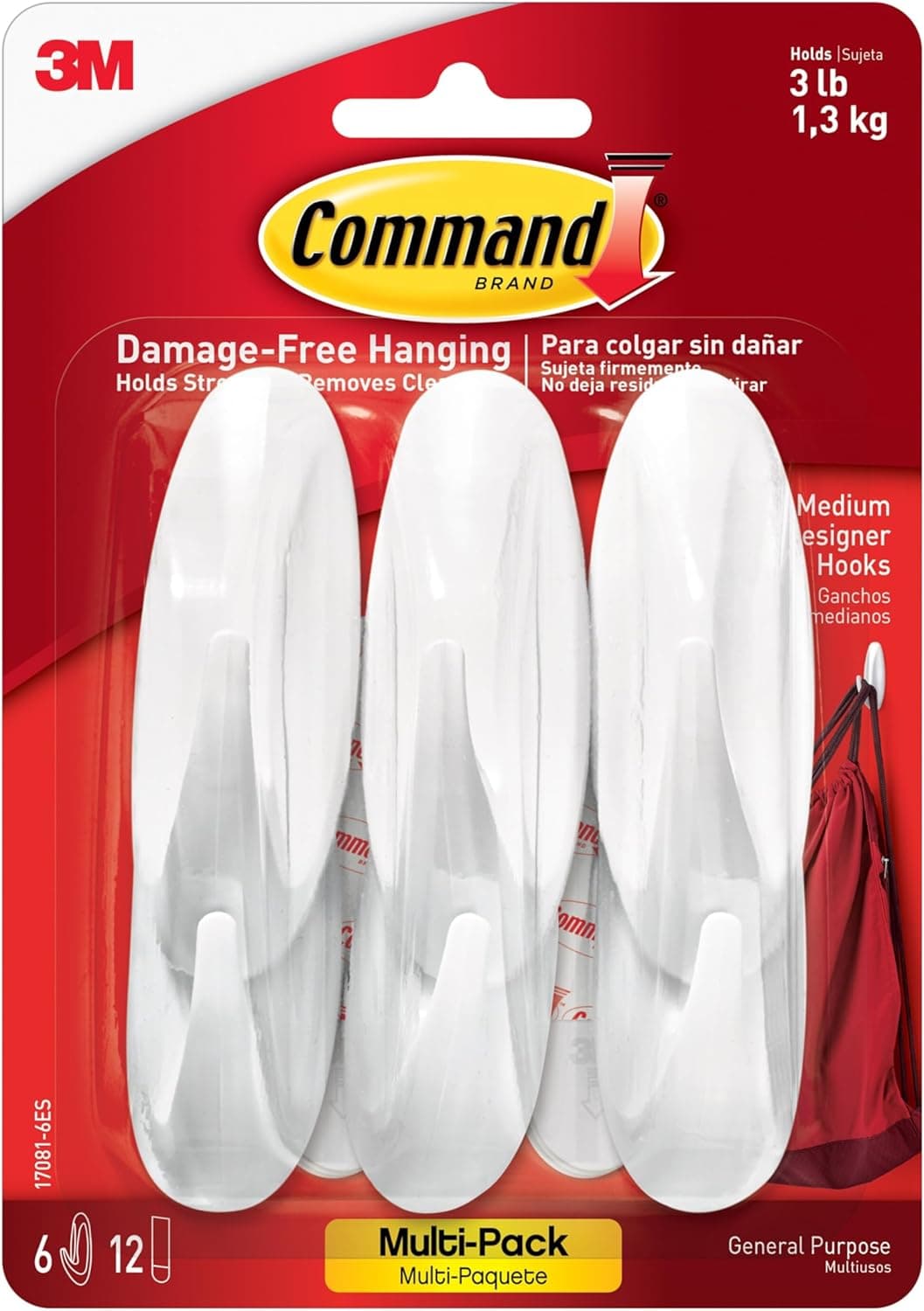
+ Lower-profile designer styling looks tidier than utility hooks for visible living-room and bedroom spots
From our guide: Best Damage-Free Wall Hooks for Renters
Popular right now
- Best Damage-Free Wall Hooks for RentersBuying guide
- Best Air Purifiers for Small ApartmentsBuying guide
- Best Quiet Fans for Small BedroomsBuying guide
- Best Compact Ironing Boards for Small ApartmentsBuying guide
- Best Peel-and-Stick Wallpaper for RentersBuying guide
- Small-Space Coffee Station IdeasArticle
Based on the last 28 days of search and visitor data.